•  
  •  
 

Malaysian Journal of Computing (MJoC)

Author Guidelines & Policies

Submission Preparation Checklist

As part of the submission process, authors are required to check their submission's compliance with all of the following items, and submissions may be returned to authors that do not adhere to these guidelines.

[✓] The submission has not been previously published, nor has it been submitted to another journal for consideration.
[✓] The author(s) may not submit the manuscript elsewhere while it is under consideration at MJoC.
[✓] If accepted, the manuscript will not be published elsewhere in the same form, in English or in any other language.
[✓] The submission file is in Microsoft Word document (*.doc or *.docx) or RTF file format.
[✓] The manuscript has been prepared for double-blind review by removing all author-identifying information from the manuscript file.
[✓] The manuscript includes an AI Usage Declaration, where applicable.
[✓] The manuscript includes a Data Availability Statement, where applicable.
[✓] A blinded (anonymised) version of the manuscript has been uploaded as a supplementary file for double-blind peer review.
[!] Plagiarism Policy: Similarity index must not exceed 25%. Check via Turnitin/iThenticate before submission.
MANUSCRIPT SUBMISSION GUIDELINES

Manuscripts must be submitted together with the copyright form electronically using the MJoC online submission system at https://mjoc.researchcommons.org/cgi/submit.cgi?context=journal.

The electronic manuscript shall be prepared in accordance with the Manuscript Preparation Guide at https://mjoc.researchcommons.org/journal/styleguide.html.

All submissions will be subjected to a double-blind peer review process by the respective panel of experts.

DOUBLE-BLIND SUBMISSION INSTRUCTIONS

MJoC practises a double-blind peer review process. Therefore, authors must ensure that the manuscript file does not contain any information that may reveal the identity of the author(s).

Before submission, authors must:

1. Remove all author names, affiliations, email addresses, ORCID IDs, acknowledgements, and funding information from the manuscript file.

2. Avoid self-identifying statements such as “in our previous study” or “as reported in our earlier work”. Such references should be written in a neutral form.

3. Ensure that file names, document properties, comments, tracked changes, and metadata do not contain author-identifying information.

4. Upload the title page or author information separately, if required by the submission system.

5. Include acknowledgements, funding details, author contribution, and conflict of interest statements only in the appropriate section required by the journal or after the review process, where applicable.

Manuscripts that are not properly anonymised may be returned to the authors for correction before being sent for review.

AI USAGE DECLARATION

Authors must declare the use of generative artificial intelligence (AI) tools or AI-assisted technologies in the preparation of the manuscript, where applicable.

AI tools should not be listed as authors, as authorship requires accountability, responsibility, and approval of the final manuscript.

Examples of AI use that should be declared include:

1. Generating, editing, or paraphrasing substantial portions of text.

2. Producing images, figures, tables, codes, datasets, or analytical outputs.

3. Assisting with data analysis, interpretation, or literature synthesis.

Suggested declaration statement:

The author(s) declare that [name of AI tool/service] was used to assist with [specific purpose, e.g., language editing, grammar checking, data analysis, or figure generation]. The author(s) have reviewed, edited, and take full responsibility for the final content of the manuscript.

If no AI tool was used, authors may state:

The author(s) declare that no generative AI tools or AI-assisted technologies were used in the preparation of this manuscript.
DATA AVAILABILITY STATEMENT

Authors are encouraged to include a Data Availability Statement in the manuscript. This statement should explain whether the data supporting the findings of the study are available, and if so, where and how they can be accessed.

Suggested statements include:

The data that support the findings of this study are available from the corresponding author upon reasonable request.
The data that support the findings of this study are openly available at [repository name/link].
Data sharing is not applicable to this article as no new data were created or analysed in this study.
The data are not publicly available due to privacy, confidentiality, ethical, or legal restrictions.
ARTICLE LICENSING & COPYRIGHT POLICY

Upon acceptance for publication, copyright of the article will be transferred to the Journal. However, the authors retain publishing rights with respect to the terms of Creative Commons Attribution-ShareAlike 3.0 Unported License (CC BY-SA 3.0).

📥 Click here to download the Copyright Form

OPEN ACCESS POLICY

MJoC is an open access journal. The articles on this site are available in full-text and free of charge to the readers.

SUBMISSION FEES AND CHARGES

This journal charges a minimal processing fee. More information can be obtained from the article processing charge page.

PLAGIARISM POLICY

All works in the manuscript should be free of any plagiarism, falsification, fabrication, or omission of significant material. Authors are expected to explicitly cite others' work and ideas, even if the work or ideas are not quoted exactly or paraphrased.

Self-plagiarism can occur in at least two ways:

1. Authors recycle portions of their previous writings by using identical or nearly identical sentences or paragraphs from earlier writings in subsequent research papers, without quotation or acknowledgement; or

2. Authors create multiple papers that are slight variations of each other, which are submitted for publication in different journals but without acknowledgement of the other papers.

The similarity score must be checked using plagiarism/similarity detection software such as Turnitin or iThenticate. The similarity index MUST NOT EXCEED 25%, including references.

EDITORIAL POLICY

The authors must ensure any articles submitted to MJoC are not published elsewhere and are not under consideration by any other journals. The manuscript must not be submitted elsewhere while it is under consideration at MJoC. The content of the articles must be original and not result of plagiarism or in copyright violation from other works. The Editors reserve the right to reject any articles which do not meet the required quality.

PEER REVIEW POLICY

The journal uses a double-blind peer review process, which means both the reviewer and author identities are concealed from the reviewers and vice versa throughout the review process.

FREQUENCY OF PUBLICATION

2 issues per year, April and October. Previously, the journal was published in June and December until June 2020.

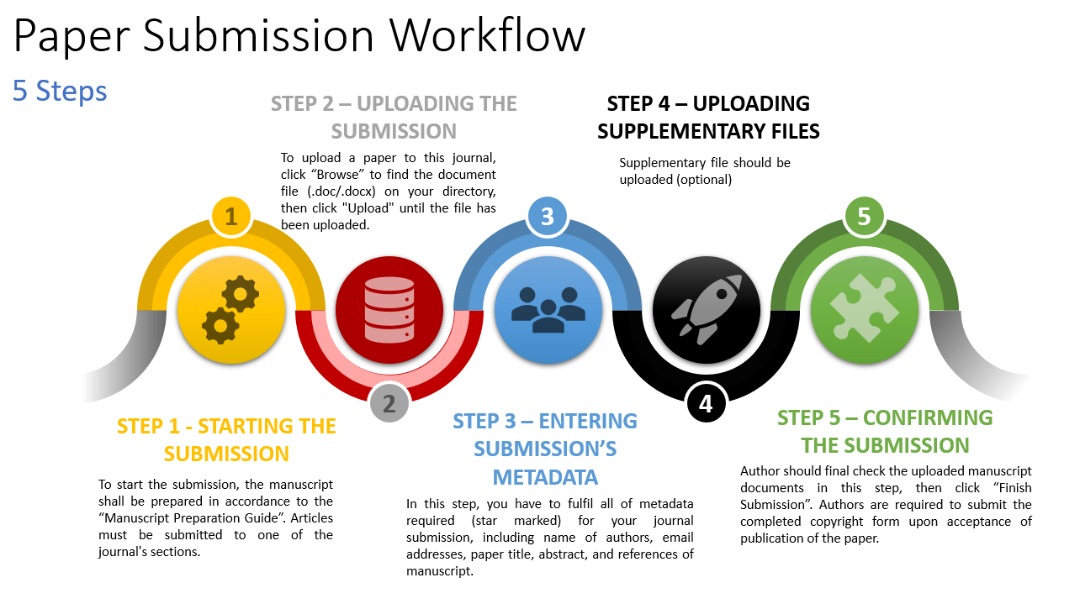
DURATION AND PAPER SUBMISSION WORKFLOW

The usual duration for the peer review process is 2–4 months, depending on the reviewers’ response.

Paper Submission Workflow

Workflow

Malaysian Journal of Computing • 2026